|
Future lab leaders
compete for top prize at
LabQ at WHX Labs
(DUBAI)
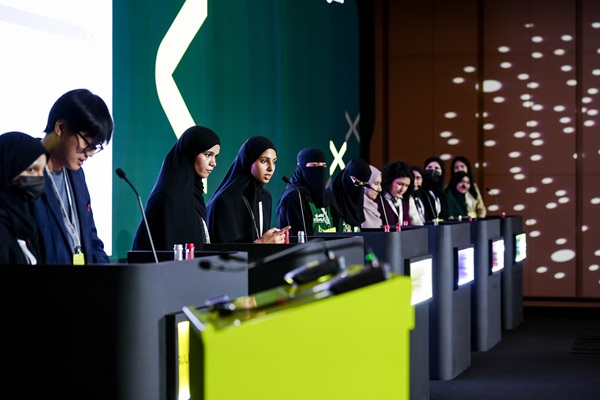
- A leading Final-year
laboratory science students
competed at the third
edition of LabQ, an
inter-university quiz
competition held at
WHX Labs in Dubai.
Students from Gulf Medical
University won the top prize
and were praised by the
panel for demonstrating
exceptional knowledge in
pathology and laboratory
medicine.
The annual
competition brought together
teams from leading
institutions, including Gulf
Medical University, Higher
Colleges of Technology, King
Saud bin Abdulaziz
University for Health
Sciences, Liwa University,
Qatar University, and the
University of Sharjah.
Students were challenged
on their knowledge of
pathology and laboratory
medicine by a jury of health
industry leaders, including
Jennifer Young, Director of
International Partnerships
at ASCP BOC; Nazik Hamad,
Senior Clinical Scientist at
the Dubai Blood Donation
Centre; and Ryan Muldoon,
Head of Operations at
Unilabs Middle East. The
competition was led by the
Master of Ceremonies and
Scientific Advisor, Dr.
Rania Seliem, Head of
Pathology at Rashid
Hospital.
Commenting
on the competition,
Rejoy Penacerrada,
Conference Director, Informa
Markets, said:
“Each year, the caliber of
talent showcased at LabQ
continues to rise. These
students represent the
future of the laboratory and
diagnostics sector, and we
are proud to provide a
platform that connects
final-year graduates
directly with the industry.
We would like to
congratulate the winning
team from Gulf Medical
University.”
Now in
its 25th year, WHX Labs
remains at the forefront of
the region’s laboratory and
diagnostics sector. The
event concludes today at
Dubai World Trade Centre and
has coincided with WHX at
the Dubai Exhibition Centre,
together forming the world’s
largest healthcare
gathering.
Held under
the patronage of the UAE
Ministry of Health and
Prevention, WHX Labs
reflects the nation’s
commitment to advancing
healthcare excellence. The
event brings together global
and regional leaders to
foster collaboration, share
expertise, and address the
key challenges shaping the
future of laboratory
science.
 PRINT
THIS ARTICLE
PRINT
THIS ARTICLE
|