|
Report: Obesity
intervention could boost UAE
GDP by $51 Billion by 2031
(DUBAI)
-
A UAE report launched in
collaboration with the
Ministry of Economy and
Tourism revealed
far-reaching benefits of
obesity intervention across
health, the economy,
society, and education, in
line with the ‘We the UAE
2031’ vision.
The
launch was in the presence
of H.E Dr Maria
Hanif Al Qassim, assistant
Undersecretary for Policies
and Economic Studies
in the ministry, who said in
her speech at the event that
the report comes at an
important time, as it
highlights the hidden
effects of obesity on the
economy, society and human
development, and not only on
health, stressing that the
importance of the report
lies in its reliance on
evidence and data to measure
the real impact of weight
loss, which contributes to
supporting data-based
policymaking and enhancing
cooperation between
government agencies, the
health sector, insurance
companies and employers.
She added that the UAE
continues to establish
health as a national
priority within its
development vision, noting
that a healthy and
productive society is a key
factor in supporting quality
of life, innovation, and
economic resilience.
The report titled ‘Beneath
the Surface: The Hidden
Socioeconomic Impacts of
Weight Loss’ highlights a
significant opportunity for
the UAE to unlock both
health and economic value
through earlier and more
effective obesity
intervention. These
innovative interventions
could help more than 1.2
million adults overcome
obesity, potentially
contribute $51 billion to
GDP by 2031, and save $1.5
billion in health care
costs.
Fadi
Fara, CEO of Whiteshield,
said: “This report
reveals, for the first time,
the true scale of the
benefits generated by weight
loss and obesity treatment
in the UAE - not only in
terms of improving
individual health, but also
through economic and social
benefits and positive
impacts on the future
workforce. The effective
obesity treatment policies
are not only good health
policies, but they are also
sound economic policies.
With recent advances in
research and innovation,
countries now have an
unprecedented opportunity to
address the economic and
social burden of obesity
with greater ambition and at
greater speed than ever
before.”
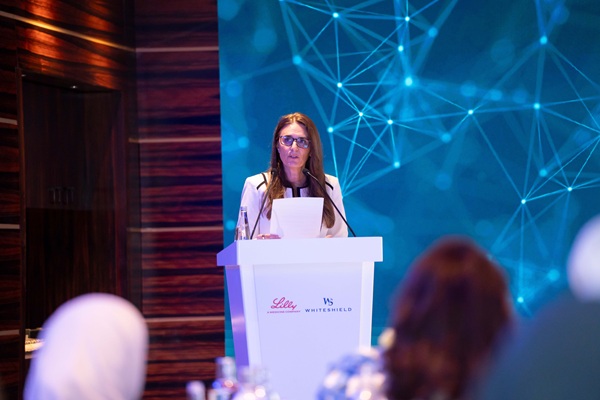
In her
speech at the launch,
Leena Aziz, Senior
Director, Corporate and
Government Affairs, Gulf,
Lilly,
said: “Obesity is a
complex, chronic disease
that impacts not only
individual health, but also
workforce productivity,
economic resilience, and
long-term national
development”, and added:
“The UAE has made important
progress in prioritizing
health as part of its
national agenda, and there
is a clear opportunity to
build on this momentum by
further integrating
prevention, early
intervention, and access to
care. We are committed to
collaborating across the
healthcare ecosystem to
improve understanding,
reduce stigma, and support
more people earlier in their
journey.”
The
Accelerated intervention
could help more than 1.2
million adults in the UAE
transition out of obesity by
2031, and prevalence could
fall by 15 percentage
points, unlocking up to $1.5
billion in cumulative
healthcare savings, add $51
billion to GDP in 2031
alone.
The report
also highlights that GDP
growth could rise by an
additional 1.5 percentage
points above baseline
projections, bringing the
UAE’s GDP to an estimated
$790 billion by 2031,
underscoring the role of
population health as a
driver of economic
resilience and
competitiveness. Worker
productivity could increase
by the equivalent of up to
five additional working days
per year per individual
previously living with
obesity, while annual
individual income could rise
by up to $772.
Accelerated obesity
interventions could lead to
an estimated 75,000
additional births by 2031,
of which 24,000 would be
Emirati, while more than
17,000 additional
individuals could join the
workforce, including over
9,000 Emirati women,
reinforcing the link between
public health, workforce
participation, and long-term
demographic sustainability.
The report also projects
more than 2,000 additional
bachelor’s degree enrolments
and a 1.4 percent reduction
in university dropout rates
under the accelerated
intervention scenario.
The report segments
obesity intervention into
key themes, which include
health, economy, society,
and education, which support
the building of sustainable
health and economic
strategies based on data and
enhance the country's
readiness for the future.
 PRINT
THIS ARTICLE
PRINT
THIS ARTICLE
|