|
|
Trust has long been an essential component of
effective governance.
However, in the modern age
of technology, it has
evolved into something far
more structural. As
governments accelerate their
digital transformation
agendas, trust is no longer
a concept or an aspirational
value. It is evolving into
its own infrastructure, particularly evident
in the UAE, where the rapid
digitization of public
services is reshaping how
individuals, businesses, and
institutions interact.
From paperless services
to smart courts, the nation
has established itself as a
global leader in digital
governance. International
benchmarking consistently
places the UAE at the
forefront of integrated
digital identity, and for good reason. The UAE
Digital Government Strategy
2025 and the UAE Strategy
for Artificial Intelligence
2031 both demonstrate this,
serving as operational
blueprints with verification
infrastructure at their
center.
AI
Era has Transformed Fraud
Fraud is no longer
limited to forged documents
or basic impersonation. It
is faster, more scalable,
and significantly harder to
detect. The UAE
Cybersecurity Council’s
State of Scams in the UAE
2024 report found that 50
per cent of those surveyed
experienced AI-enabled
scams, reflecting the
growing sophistication of
digital fraud in the region,
especially with regard to
AI-driven techniques in
cybercrime.
Globally,
this trend is similarly
pronounced. The World
Economic Forum’s Global
Cybersecurity Outlook 2026
highlights cyber-enabled
fraud as one of the most
prominent global threats.
According to the report, 87
per cent of businesses are
facing increased AI-related
vulnerabilities, while 94
per cent expect AI to be the
most influential factor
shaping cybersecurity in
2026. At a corporate level,
identity fraud is also
growing in complexity. A
global survey by Regula
shows that one in three
organizations has already
encountered deepfake,
biometric fraud, or identity
spoofing incidents. The
conclusion is therefore
clear – as economies go
digital-first, the critical
vulnerability is no longer
the transaction itself but
the identity behind it.
Reinforcing
Verification as a System
Verification has
traditionally been viewed as
a step in the process or a
field to be checked. That
model is no longer
sufficient. Deepfake
technologies, synthetic
identities, and AI-generated
documents have all
completely altered the
threat landscape. Today,
verification needs to be an
ongoing, intelligence-driven
system that confirms
authenticity at the source.
This is where Primary Source
Verification (PSV) becomes
indispensable. By confirming
credentials directly with
issuing authorities, PSV
transforms verification from
a surface check to a
source-confirmed process,
significantly reducing
exposure to fabricated or
altered records.
Simultaneously, AI-driven
document analysis improves
decision-making speed and
accuracy by enabling
real-time detection of
tampering and
inconsistencies. Notably,
these capabilities are
combining into unified
verification frameworks
across governments and
regulated industries.
DataFlow Group operates at
this layer, working closely
with businesses,
governments, and regulators
to validate identities and
credentials at the primary
source on a larger scale. We
define verification not as
an administrative function
but as a strategic
capability.
Developing Trust in Public
Infrastructure
The latest legislative
and regulatory changes in
the UAE indicate an
extensive grasp of this
shift in the landscape. A prime
example is the establishment
of the English-language
Notary Service within the
Dubai International
Financial Centre (DIFC)
Courts framework under Dubai
Law No. (2) of 2025.
The service incorporates
AI-powered document
verification and primary
source authentication,
enabling digital
notarization across multiple
channels while maintaining
the integrity that legal
procedures demand. In this
context, verification is no
longer a back-end function
but a fundamental layer of
governance supporting legal
systems, workforce mobility,
and cross-border
transactions.
The Way Forward
As digital ecosystems
grow, the question of
whether fraud can be
eradicated is no longer
relevant. Determining if
systems are built to detect,
adapt, and react to threats
in real time is the true
challenge. Verification
infrastructure will be key
to shaping this future.
Similar to payment networks
or cloud infrastructure,
verification is becoming a
shared layer that modern
economies progressively
depend on by default.
For governments and
regulators, the priority is
clear. Lawmakers must invest
in source-based
verification, use artificial
intelligence responsibly,
and expand verification
frameworks across
industries. Organizations,
on the other hand, must
transition from
compliance-led checks to
intelligence-driven,
continuous verification
models that adapt to new
threats. For the UAE, guided
by the long-term vision of
the UAE Centennial 2071,
trusted digital
infrastructure will no
longer be a supporting
function but rather the
foundation upon which
everything else is designed.
About the author:
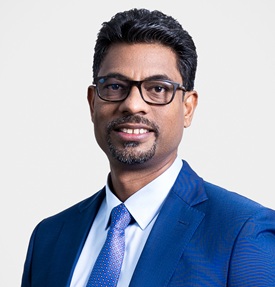
Sunil Kumar, is the Chief Executive
Officer of
DataFlow Group,
headquartered in Dubai, UAE.
The
views and opinions expressed
in this article are those of
the author and do not
necessarily reflect the
editorial policy or position
of ArabMedicare.com.
 PRINT
THIS ARTICLE
PRINT
THIS ARTICLE
|