|
|
In recent years, the Egyptian healthcare
sector has witnessed an
unprecedented strategic
transformation with the
rollout of the
Universal Health Insurance
System (UHIS)—one
of the most significant
health and social
projects—which targets a
comprehensive insurance
umbrella, ensuring equitable
access to high-quality
health services for all
citizens, particularly
vulnerable groups,
underscoring the state’s
commitment to social justice
and, as a result,
guaranteeing one of the
essential rights of
citizens: the right to
healthcare.
Notably,
the Universal Health
Insurance Authority (UHIA)
is tasked with managing and
funding the UHIS, developing
the financial and regulatory
frameworks, and
orchestrating contractual
relationships among diverse
healthcare providers. The
system separates funding
from service provision,
ensuring effective oversight
of health services
delivered, optimizing
available resources, and
enhancing citizen trust in
the efficiency and equity of
the UHIS.
Since the
actual UHIS rollout, the
UHIA has been steadfast in
expanding the health
provider network by
contracting with both public
and private hospitals,
health centers, and clinics
under clearly established
quality standards,
recognizing the paramount
importance of integration
across components of the
health sector. In parallel,
the private sector plays an
instrumental role in
increasing capacity,
improving service delivery,
and offering beneficiaries a
variety of adequate
healthcare options, with all
service providers complying
with the same quality and
regulatory standards.
One of the key pillars
of the system is exempting
vulnerable people—the state
budget covers 100% of their
premiums and
co-payments—ensuring that no
one is left behind,
irrespective of
socio-economic status.
Eligibility is determined by
precise controls and
standards, informed by
official databases and the
Prime Minister’s decrees,
along with case reviews
conducted by specialized
committees to guarantee that
only eligible groups are
exempted, thus promoting
social solidarity and
bridging gaps in service
delivery across various
segments.
The efforts
to implement the UHIS have
been evident in the
first-phase
governorates—Port Said,
Luxor, Ismailia, Suez, South
Sinai, and Aswan—with around
5.2 million enrolled
beneficiaries and an 82%
enrolment rate. Furthermore,
medical claims reimbursed to
service providers reached
approximately EGP 15.867
billion, which reflects the
considerable volume of the
services delivered and
financial sustainability,
thereby ensuring system
stability and operational
efficiency.
UHIA has
also contracted with 526
service providers, 32% of
which are private
facilities, highlighting the
expansion of the provider
network and the integration
of the public and private
sectors in comprehensive
healthcare provision. This
has consequently bolstered
accessibility to health
services, reduced waiting
times, and promoted
competitiveness among
providers, ultimately
boosting the quality of
healthcare delivered to
citizens.
Beyond its
financial and regulatory
mandates, the UHIA has
implemented comprehensive
awareness campaigns to
inform citizens of the UHIS
objectives, benefits,
enrolment mechanisms, and
service utilization in
conjunction with different
executive stakeholders and
civil society organizations
through seminars, community
meetings, and media
campaigns in the UHIS
governorates. These
activities have contributed
to rectifying some
misconceptions, raising
awareness of citizens about
their insurance
entitlements, and
encouraging them to enroll
in the system and leverage
the available services.
As the UHIA expands
coverage, the rollout of the
UHIS across the second-phase
populous governorates—Minya,
Marsa Matrouh, Kafr El
Sheikh and Alexandria—is
underway, following a phased
plan that ensures health
infrastructure readiness and
the availability of
necessary resources to
guarantee a successful UHIS
implementation and achieve
the envisaged strategic
objectives.
Moreover,
the UHIS has driven a
concrete change in the lives
of citizens, securing
financial protection for
households from
out-of-pocket health
expenditure, enabling
advanced diagnostic and
curative services without
incurring exorbitant costs.
The system has also
optimized resource
allocation nationwide and
promoted long-term health
planning, in turn,
contributing to a more
sustainable healthcare
system capable of facing
future challenges.
Against the backdrop of
these achievements, the UHIS
has emerged as a national
benchmark for comprehensive
health reform, seamlessly
integrating universal health
coverage, prudent resource
management, and a steadfast
commitment to social
justice. The state is making
significant, measurable
progress by systematically
expanding the system to
include all governorates,
aligning with the objectives
of Egypt Vision 2030. This
strategic approach aims to
modernize the health system,
ensuring the provision of
high-quality services,
improved living standards,
and sustainable development
for every Egyptian citizen.
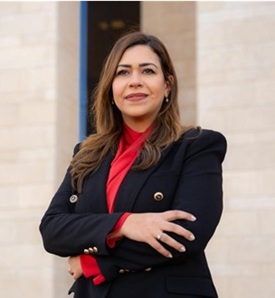
About the author:
Mai Farid serves as the Chief
Executive Officer of the
Universal Health Insurance
Authority (UHIA), leading
the implementation and
expansion of Egypt’s
Universal Health Insurance
System (UHIS). She also
manages the UHIS Project
Management Unit, at the
Ministry of Finance,
coordinating national health
financing reforms and
partnerships with
development partners such as
the World Bank, AFD, JICA,
WHO, and the European Union.
The
views and opinions expressed
in this article are those of
the author and do not
necessarily reflect the
editorial policy or position
of ArabMedicare.com.
 PRINT
THIS ARTICLE
PRINT
THIS ARTICLE
|