|
|
When a scan changes the plan, it changes the
outcome. In oncology and
neurology, timing matters,
and so does what we can
detect before symptoms or
structural changes become
obvious. Hybrid Positron
Emission Tomography combined
with Magnetic Resonance
Imaging (PET/MRI) combines
metabolic PET imaging with
the structural detail of
diagnostic MRI, supporting
earlier and more confident
detection of diseases such
as cancers and
neurodegenerative
conditions. Rather than
relying on anatomy alone,
PET/MRI can highlight
functional and metabolic
activity that may indicate
disease progression, helping
clinicians refine decisions
across diagnosis, staging,
and follow-up.
The Molecular
Imaging Center (I-ONE©
Center) operates
under the umbrella of
Wadi-Jeddah, the investing
arm of King Abdulaziz
University in Jeddah, and is
designed to bridge academic
capability with real
clinical demand. That
“university-to-clinic” link
matters because advanced
imaging is only valuable
when it is integrated into
multidisciplinary care
pathways and continuously
updated through research,
training, and quality
practice.
I-ONE
Center has served thousands
of patients across the
Kingdom since 2018. Across
multiple referral scenarios,
PET imaging has helped
reveal clinically
significant findings such as
metastases or abnormalities
that may be missed by
conventional imaging alone,
enabling earlier treatment
adjustment when time is
critical. Additionally,
post-treatment follow-up
scans have shown good
treatment response in about
85% of cases within our
monitored follow-up cohort,
providing clinicians and
patients with clearer
evidence of therapeutic
effectiveness.
The
increasing number of
referred cases to the Center
from different health
sectors reflects its role as
a trusted regional hub.
Today, 50% of referrals are
from government hospitals,
30% from private providers,
and 20% are supported by
charity organizations. This
diversity highlights how
widely the I-ONE Center is
relied upon across the
health system, particularly
in the western and southern
regions of Saudi Arabia,
where access and distance
can be a real barrier to
timely diagnosis. Our
PET/MRI scanner is among the
first clinically operational
PET/MRI modalities in Saudi
Arabia, in parallel with our
PET/CT scanner, which is
part of a limited national
footprint of PET/CT
availability.
Beyond
imaging, I-ONE Center is the
only provider of
radiopharmaceutical tracers
in the western and southern
regions and one of only a
few providing centers in
Saudi Arabia, which puts
I-ONE at the center of a
fast-growing national demand
curve. I-ONE produces the
radiopharmaceutical tracers
needed for PET imaging in
our Center and also provides
these radiotracers to other
hospitals in the region.
This crucial role provides
the service locally, avoids
travel to other regions, and
reduces travel-related
expenses. Additionally,
these services allow public
and private hospitals in the
western and southern regions
to expand their medical
services without being
constrained by tracer
availability or supply
logistics.
At the
same time, scaling this
ecosystem comes with
operational challenges. We
continue expanding our
medical services while
managing high hospital
capacity needs, wide
geographic coverage,
multiple requested products
and tracer types, and
limited availability of
specialized talent in rare
disciplines. These
constraints are not unique
to I-ONE; they represent a
broader system challenge:
advanced imaging capacity
must grow in parallel with
workforce development,
supply chain resilience, and
referral pathway maturity.
The presence of I-ONE
Center under King Abdulaziz
University/Jeddah also
strengthens our ability to
activate partnerships with
companies and institutes
inside and outside the
Kingdom to provide
up-to-date services in this
field. These partnerships
are not “nice to have.” They
are a practical growth lever
for technology transfer,
clinical protocol
development, and training
pipelines that keep Saudi
capabilities current and
competitive.
Patient
privacy and data protection
are non-negotiable. Personal
imaging data is highly
secured and follows the
regulations of national
regulatory authorities to
ensure patient privacy, with
strictly limited access to
authorized personnel only.
Trust is part of the
service, not an extra
feature.
I-ONE Center
aligns with Vision 2030 by
localizing advanced
technology in the medical
industry and emphasizing
early disease detection to
improve survival rates and
quality of life. These
applications are also
enhancing investment in the
medical sector while
supporting talent
development for Saudis. The
practice of molecular
medicine is well-developed
in Saudi Arabia compared to
many countries in the region
due to factors including
early adoption, financial
support, and the expansion
of training and practical
programs across specialties.
Furthermore, as healthcare
services advance, the field
must progress rapidly to
meet the rising demand and
maintain care pathways that
are evidence-driven and
cost-effective.
I-ONE
provides high-qualification
and certification on-site
training programs for health
practitioners, including
physicians, technologists,
nurses, physicists, and
radiopharmacists. This is
how advanced imaging becomes
sustainable: not just
through equipment, but
through people, protocols,
and a learning culture.
Looking ahead, we anticipate
that AI applications will
enhance medical imaging
services by reducing
interpretation time,
improving clinical accuracy,
and strengthening predictive
capabilities once they are
implemented. The opportunity
is clear: faster reads, more
consistent reporting, and
smarter longitudinal
tracking—especially when
combined with strong
clinical governance.
Bottom line:
PET/MRI and
molecular imaging are no
longer “premium extras.”
They are becoming essential
infrastructure for modern
healthcare. I-ONE’s
experience shows what’s
possible when advanced
technology, localized
radiopharmaceutical supply,
and academic-clinical
integration are built into
one model—and it also shows
where the next push must
focus: scaling capacity,
expanding specialized
workforce pipelines, and
deepening cross-sector
partnerships so more
patients can benefit, closer
to home.
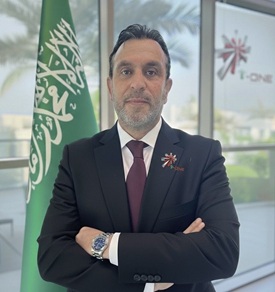
About the author:
Dr. Samih Al-Sheikh is the General
Manager of the Molecular
Imaging & Medical Sector at
Wadi Jeddah, with over 26
years of experience in the
medical laboratory and
diagnostics field. He
previously served as CEO of
Al-Burj Medical Laboratories
and has led the
establishment and expansion
of internationally
accredited laboratory
networks across the Gulf
region and beyond.
The
views and opinions expressed
in this article are those of
the author and do not
necessarily reflect the
editorial policy or position
of ArabMedicare.com.
 PRINT
THIS ARTICLE
PRINT
THIS ARTICLE
|