|
New year, new focus on
health: Mayo Clinic expert
highlights effective
treatment options for
obesity
(DUBAI)
- In the month of January,
people around the world make
New Year's resolutions to
improve their health. For
some adults living with
obesity, lifestyle changes
alone may not be enough to
treat the disease.
The World Health
Organization reports that 1
in 8 people in the world was
living with obesity in 2022.
In parts of the Middle East,
adult obesity rates are
projected to reach nearly
40% by 2030, according to
the World Obesity
Federation.
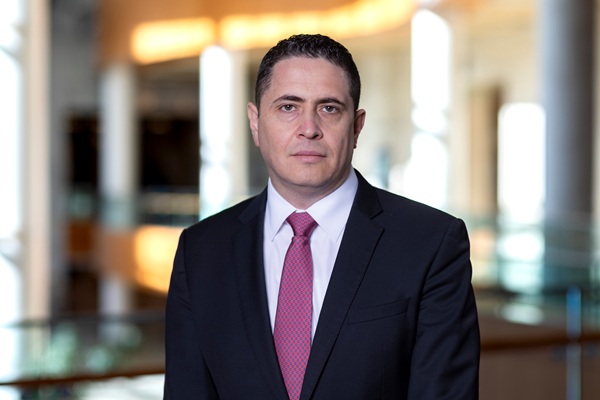
Omar Ghanem, M.D., Mayo
Clinic medical director for
the Middle East and
a metabolic surgeon and
chair of Metabolic and
Abdominal Wall
Reconstructive Surgery
at
Mayo Clinic in
Rochester, Minnesota (USA), says
people should care for their
health throughout the year.
Yet, the start of a new year
is a meaningful time for
some people to reassess
their health and learn about
all available treatment
options for obesity.
"Obesity is a complex
disease, not a personal
failure," Dr. Ghanem says.
"Many people try diets,
exercise programs, and
medications, but still
struggle because obesity has
many causes — psychological,
metabolic, behavioral, and
genetic. Because it is a
complex disease, it requires
a comprehensive treatment.
Metabolic surgery helps
treat obesity in ways other
treatments cannot."
Addressing obesity
stigma
Despite its rising
prevalence, obesity is often
misunderstood. Many people
living with obesity
encounter stigma — including
the false assumptions that
weight is simply a matter of
willpower or personal
responsibility. Research
shows that obesity is a
chronic disease influenced
by multiple factors outside
an individual's control, and
stigma can prevent people
from seeking appropriate
treatment.
Research
published in The Lancet's
eClinicalMedicine reports
that weight stigma leads to
avoidance of healthcare,
delays in seeking medical
care and reduced trust in
providers — all of which can
interfere with receiving
appropriate, evidence-based
treatment.
Metabolic surgery offers
lifesaving benefits for
patients with obesity
According to studies,
metabolic surgery is an
effective and durable
therapy for severe obesity.
Metabolic surgery typically
results in 25%–30% total
body weight loss that often
is sustained for many years.
Metabolic surgery supports
weight loss, and it also can
improve conditions
associated with obesity,
such as diabetes, sleep
apnea, high blood pressure
and high cholesterol.
"For many patients,
surgery is the turning point
that allows them to get
their health back," Dr.
Ghanem says. "Some patients
no longer need diabetes or
blood pressure medications
immediately after surgery.
It can be life-changing."
Beyond weight
loss: Surgery can open doors
to other lifesaving care
At Mayo Clinic, Dr.
Ghanem and colleagues
regularly treat patients
with complex medical needs
who require weight loss
before they can safely
undergo another operation,
such as a heart or kidney
transplant, joint
replacement, or hernia
repair.
"These are
highly coordinated cases
involving cardiologists,
endocrinologists,
anesthesiologists, and
transplant specialists," he
says. "Multidisciplinary
care allows patients to
access treatments they were
previously told were
impossible."
Mayo
Clinic also specializes in
corrective bariatric
surgeries for complications
from procedures performed
elsewhere, including
hernias, ulcers, fistulas,
malnutrition, or weight
regain.
A new
era in obesity treatment
Dr. Ghanem says obesity
treatment continues to
evolve. A promising approach
is the integration of
anti-obesity medications
with surgery.
"Combining medical and
surgical therapies has
tremendous potential —
similar to how medications
and surgery work together in
cancer treatment," he says.
Mayo Clinic research has
demonstrated that bariatric
surgery provides long-term
metabolic benefits, may
reduce cancer risk, and can
even be performed at the
same time as a liver
transplant in select
patients — improving
long-term survival.
Mayo Clinic in the
Middle East
The Mayo Clinic is marking
its fifth anniversary in
Dubai, where regional staff
provide patients with
complimentary assistance
with travel arrangements,
medical record reviews,
appointment coordination,
and language services. "Our
goal is to ensure people
across the Middle East can
access world-class care when
they need it," Dr. Ghanem
says.
 PRINT
THIS ARTICLE
PRINT
THIS ARTICLE
|