|
Abu Dhabi Department of
Health and Roche collaborate
on real-world evidence for
diabetic eye care
(ABU DHABI)
-
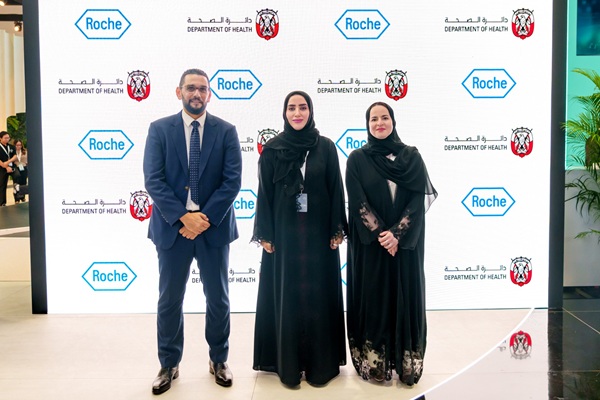
The Department of Health –
Abu Dhabi (DoH) and
Roche Pharmaceuticals UAE
have announced a
collaboration to examine how
real-world evidence (RWE)
can inform the early
detection and management of
diabetic macular edema
(DME), a complication of
diabetes that can cause
vision loss. The
announcement was made at the
Abu Dhabi
Future Health Summit (ADFHS)
2026.
The initiative
will focus on evaluating
existing care pathways,
screening practices,
clinical outcomes, and
healthcare resource
utilization to identify
potential gaps in DME care
across Abu Dhabi. The
findings are intended to
inform recommendations for
improving screening,
diagnosis, referral and
long-term follow-up.
DME occurs when fluid
accumulates in the macula,
the central part of the
retina responsible for
detailed vision. Without
timely diagnosis and
appropriate management, the
condition can lead to
significant visual
impairment. Regular eye
examinations, early
detection, and ongoing
monitoring are important
components of care for
people living with diabetes.
Dr. Asma
AlMannaei, Executive
Director of the Health Life
Sciences Sector at DoH,
said the collaboration would
use locally generated
evidence to identify
opportunities to improve
screening, referrals and
follow-up for people at risk
of diabetic eye
complications.
“The
value of health data lies in
what we do with it,” she
said, adding that the
findings could help inform
more timely and coordinated
care within Abu Dhabi’s
healthcare system.
As
part of the program, DoH and
Roche Pharmaceuticals UAE
will examine the burden of
DME among people living with
diabetes in the Emirate. The
analysis will consider how
patients access eye
screening and specialist
services, how referrals are
managed, and what clinical
outcomes are observed across
existing care pathways.
While international
clinical research provides
evidence on DME and its
management, local data may
help identify differences in
access to care and service
delivery within Abu Dhabi.
The collaboration will use
these insights to explore
potential interventions
tailored to the needs of the
local population and
healthcare system.
Mohamed ElShaarawy,
General Manager for the UAE
at Roche Pharmaceuticals,
said real-world evidence
could help identify delays
in care and areas where
patient pathways may be
improved.
He added
that the collaboration would
bring together Roche’s
scientific expertise and
local healthcare data to
examine opportunities for
improvement across
screening, diagnosis,
treatment and follow-up.
The partners will also
explore measures to
strengthen screening and
early detection, improve
referral pathways to
specialist ophthalmology
services, and support
evidence-based approaches to
treatment and patient
monitoring. Other areas
under consideration include
training for healthcare
professionals and raising
awareness among people
living with diabetes about
the importance of regular
eye examinations.
A
joint task force will
oversee the program’s phased
activities, facilitate
knowledge exchange and
develop recommendations
based on the evidence
generated. These
recommendations are expected
to align with recognized
clinical standards and Abu
Dhabi’s healthcare
priorities.
The
collaboration forms part of
Abu Dhabi’s broader efforts
to use health data to inform
prevention, early
intervention and care
coordination. Further
details on the program’s
implementation, including
its timeline and specific
outcomes, were not provided
in the announcement.
 PRINT
THIS ARTICLE
|