| | ArabMedicare.com News
Dubai |
October 13, 2004
|
Dubai's First Ever
Support Group for Parents of Children with Eczema Launched
Medical Experts and Local
Groups Aim to Provide Support and Expert Advice to Combat
Debilitating Condition
|
|
|
|
|
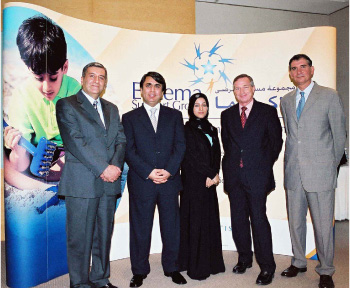
(Left to right) Dr.
Ayman A J. Al Beiruti, specialist paediatrician of the Welcare
Hospital; Dr. Ikramullah Al Nasir, specialist dermatologist and
medical director, Dermacare Skin Centre; Dr. Mariam Matar, family
physician, DDHMS and head of the health Centre, Dubai Ladies Club;
Dr. Ian G. Jefferson, chief of paediatrics, American Hospital Dubai;
and Roger Bassoul, Region Head, Arabian Gulf Company, Novartis.
|
|
|
(ArabMedicare.com News) Families, doctors, and local groups
will join together to create a new support group for the parents of
children with the debilitating skin condition atopic eczema,
announced at a recent press conference.
The "Eczema Support Group" aims to put together a program
of talks, health forums, and meetings designed to help parents
understand ways to minimize their children's discomfort, and provide
them the opportunity to share their experiences in a supportive
environment.
A number of Dubai's leading doctors have offered their support to
the group, which will be the Emirates' first ever support group
designed especially for the families of children with eczema.
"Studies indicate that eczema has become more prevalent amongst
children in the Middle East. Making parents aware of this condition
- and providing them with the information and access to medical
advice that they need - is a vital first step in combating this
condition," said Dr. Ian G. Jefferson, chief of paediatrics,
American Hospital Dubai, a founding member of the advisory board.
To launch the Support Group, an inaugural meeting will be held at
Dubai Ladies Club in November. Admission to the meeting will be
free, and paediatricians and eczema care specialists from leading
hospitals in Dubai will talk about the latest practices in eczema
management at the event.
"Eczema can be a source of substantial misery and unhappiness
for children and adult sufferers, and can, by extension, also cause
worry and concern for their families," added Dr. Jefferson.
The support groups launched today is expected to make a demonstrable
impact on the lives of adult and children sufferers by raising
awareness and helping them to live happy and active lives.
The support group was launched to respond to the concerns of a
growing community of eczema sufferers and their families in the
Middle East. A recent study by the National Allergy Group in Saudi
Arabia has highlighted a disturbing rise in the incidence of eczema
in children over the past decade, with almost 20 per cent of
children between six and 18 now suffering from the skin condition.
Given the scale of the problem, local bodies felt that a support
group that worked to bring together parents from across the UAE
could provide a valuable resource in combating the disease.
"Eczema has increased in prevalence over the past few years for
a number of reasons, and it is important that groups like this bring
together parents, doctors, and specialists to provide support and
guidance," said Dr. Ayman A J. Al Beiruti, specialist
paediatrician of the Welcare Hospital, also a founding member of the
advisory board. "In addition to providing resources for
parents, it should also serve to help us better understand this
condition and its effects upon the people of the Middle East."
To support its objectives, the Eczema Support Group plans to make
treatment leaflets available in both English and Arabic, and will
launch a website to provide care advice, details of further
meetings, and new information about eczema management. The website
is available at http://www.myeczema-elidel.com.
Other bodies supporting the Eczema Support Group include Novartis,
the global pharmaceutical company.

|
|
|
