 |
|
|
 |
|
|


Consulting & Development
Health Care (Germany)

|
|
|
|
|
|
|
|
|
|
|
|
|
|
| |
Medical
News | Saturday, 16 February, 2008 |
|
|
| |
 |
|
|
|
|
|
|
Fatty
acids beneficial in treatment for
Dry Eye Syndrome
|
|
|
|
|
|
|
|
|
(ArabMedicare.com
News) -- Research
conducted by Massachusetts
Eye and Ear Infirmary (MEEI)
Cornea Service Director and
Harvard Medical School
Professor Reza Dana, M.D.,
M. Sc., MPH, and colleagues
at the Schepens Eye Research
Institute in the United
States have found for the
first time that topical drop
application of alpha-linolenic
acid (ALA) led to a
significant decrease in
clinical signs of dry eye
syndrome (DES) in animal
models. ALA is a fatty acid
that cannot be made by the
body and must be supplied in
the diet.
Dry eye syndrome is a
condition in which the eyes
do not produce enough tears,
causing them to become dry
and irritated. Inflammation
is frequently associated
with the condition. Symptoms
of dry eye syndrome include
eye discomfort, such as
stinging or burning, eye
irritation or a feeling of
scratchiness. The condition
affects well more than 10
million people, primarily
women, in the United States
alone and can often lead to
problems with activities
such as reading and driving.
Dry eye syndrome is also one
of the most common
conditions for which
patients see eye care.
Unfortunately, treatment
options are quite limited in
terms of both efficacy and
undesirable side-effects.
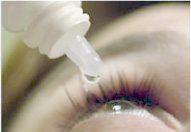
The study tested three
formulations of fatty acids:
0.2 percent alpha-linolenic
acid (an omega-3 fatty acid)
; 0.2 percent linoleic acid
(an omega-6 fatty acid) ;
and 0.1 percent alpha-linolenic
acid combined with 0.1
percent linoleic acid. An
eye drop containing each of
the three formulations was
applied topically to the eye
of a mouse once daily. An
untreated group did not
receive eye drops. Signs of
dry eye were then measured
24 hours after the last
dose. Eyes treated with ALA
showed a significant
reversal in epithelial
damage to the cornea, the
transparent dome that covers
the pupil. Results show a
beneficial effect of the
topical application of ALA
in reversing the signs of
dry eye syndrome as well as
the inflammatory changes
seen in dry eye syndrome.
"The current study for
the first time demonstrates
the benefit of topical
application of a particular
fatty acid in treating the
signs of dry eye syndrome at
both the molecular and
cellular levels. Using
topical formulations of
fatty acids to treat dry eye
would allow for more
flexibility for treatment,
including lessening side
effects that patients can
experience from oral intake
of fatty acids. Clinical
studies with topical fatty
acids are being planned,
which if successful could
alter the method by which
this common condition is
treated," said Dr.
Dana.
The study is published in
the February 2008 issue of
Archives of Ophthalmology
and was supported by grants
from Johnson and Johnson
Vision Care, Inc., and the
Sjogren's Syndrome
Foundation.

Posted:
16/FEB/08
|
|
|
|
|
|
|
|


